
Free Domain Age Checker
Look up any domain's registration date, age, and maturity rating instantly. Free, no account required.
What this domain age checker returns
Enter any domain name and the tool queries public registration records to return the data points that matter. No account required and no extra fields to fill in.
Results are sourced from WHOIS and domain registry data — the same authoritative records used by security teams, analysts, and developers who need domain age as a programmatic signal.
Registration date and age
Returns the exact date the domain was first registered, its current age broken down into years, months, and days, and a total day count for easy numeric comparison.
Age classification badge
Every result includes a plain-language label — New, Mature, or Established — so you can make an immediate judgment without interpreting raw numbers.
API-ready signal
The same data is available through the Trueguard API, structured for programmatic use in fraud detection pipelines, onboarding flows, and email verification workflows.
Why teams run a domain age lookup
Domain age is one of the fastest signals to pull. Here is where different teams use it.
Fraud and risk screening
Newly registered domains are disproportionately associated with phishing campaigns, account fraud, and payment abuse. Checking domain age during onboarding or transaction review adds a fast, low-cost signal to your risk stack. A domain registered days ago deserves more scrutiny than one with five years of history.
Email verification context
An email address is only as trustworthy as the domain behind it. When you check domain age during email verification, you can surface risky submissions — a freshly registered domain behind a business email is a red flag worth scoring. It adds a lightweight layer of context to any address validation workflow.
Lead qualification
Domain age is a practical proxy for company maturity. A business operating on a five-year-old domain is more likely to be an established organization than one that registered its domain last month. Sales and ops teams use this signal to prioritize outreach and filter out low-quality or disposable signups.
SEO and competitive research
When evaluating link targets, partner sites, or competitor positioning, domain age is a useful baseline for authority. Older domains tend to carry more accumulated trust in search rankings, though age alone is never the full picture. A quick domain age lookup helps you set expectations before investing time in a deeper analysis.
Where the data comes from
Domain age data is sourced from public WHOIS records and domain registry databases. Understanding how the lookup works and where its limits lie helps you use the signal correctly in your workflow.
WHOIS and registry records
When you submit a domain, the tool queries the public WHOIS registry for that domain's creation date. WHOIS data is maintained by domain registrars and is publicly accessible for the vast majority of top-level domains.
Age classification explained
New, Mature, and Established labels reflect how domain age correlates with trust in fraud and risk contexts. A domain under one year is New, one to four years is Mature, and five or more years is Established. These thresholds align with the ranges commonly used in fraud scoring models.
Accuracy and known limitations
Some TLDs have restricted or non-standard WHOIS access, and privacy protection services can obscure original registration dates. Domains that have been dropped and re-registered will show the most recent registration date rather than the original. Treat results as a strong starting signal, not a definitive source of truth.
Frequently asked questions
Common questions about domain age lookups and how to use domain age as a signal.
Domain age is the length of time that has passed since a domain name was first registered. It is calculated from the registration date recorded in WHOIS and registry data. Domain age is used as a signal in fraud detection, email verification, SEO analysis, and business due diligence.
Domain age is the difference between today's date and the domain's original registration date as recorded in WHOIS data. This tool expresses that difference in years, months, days, and total days elapsed. The registration date used is the earliest date on record, not the most recent renewal date.
Fraudulent actors routinely register new domains to run phishing campaigns, account takeover attempts, and payment fraud before their infrastructure gets blocklisted. A domain that is days or weeks old carries significantly more risk than one that has been active for years. Domain age alone is not conclusive, but it is one of the fastest and cheapest signals to check in a layered fraud detection system.
Search engines factor domain age and history into how they assess the authority and trustworthiness of a site over time. An older domain with a consistent record tends to have accumulated more backlinks, indexed content, and crawl history than a new one. When evaluating link targets or competitive positioning, domain age gives you a quick baseline before committing to deeper research.
Yes, in two ways. If a domain expires and is re-registered by a new owner, the WHOIS record will reflect the new registration date rather than the original one. Privacy protection services can also obscure historical registration data, making it harder to verify when a domain was truly first created. This is one reason domain age should be treated as a signal within a broader set of checks, not as a standalone verdict.
New means the domain was registered less than one year ago. Mature means it has been registered for one to four years. Established means it has been active for five years or more. These classifications give you an immediate, actionable read on where a domain sits on the trust spectrum without requiring you to interpret raw numbers.
The tool returns the registration date as recorded in publicly available WHOIS and registry data, which is the most authoritative source available. Accuracy depends on what is in the public record: some TLDs have limited WHOIS access, and privacy services can suppress original dates. For the majority of common TLDs, the data is reliable and suitable for use as a fraud or risk signal.
Yes. The same domain age data is available through the Trueguard API, returning structured data that is easy to integrate into fraud detection pipelines, onboarding flows, email verification systems, or any other workflow where you need domain age as a programmatic signal.
Add domain age to your fraud detection stack automatically.
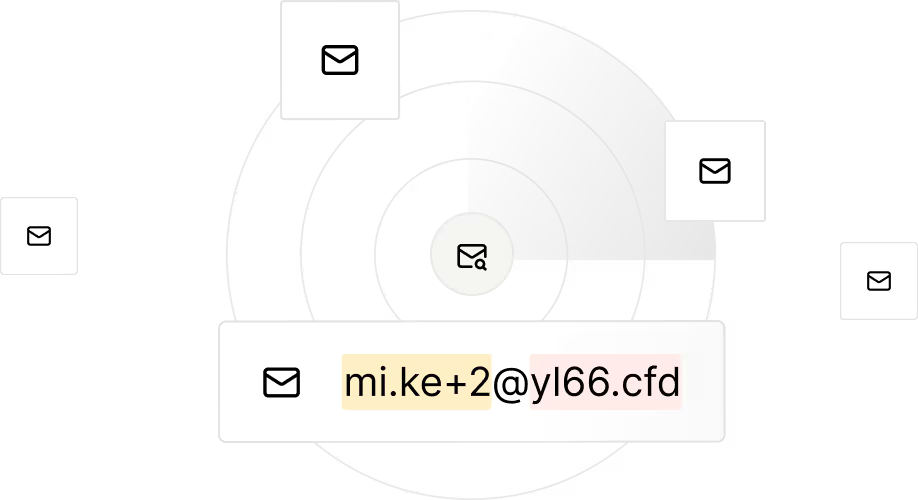
Identify disposable and low-quality emails so you can block risky signups early.
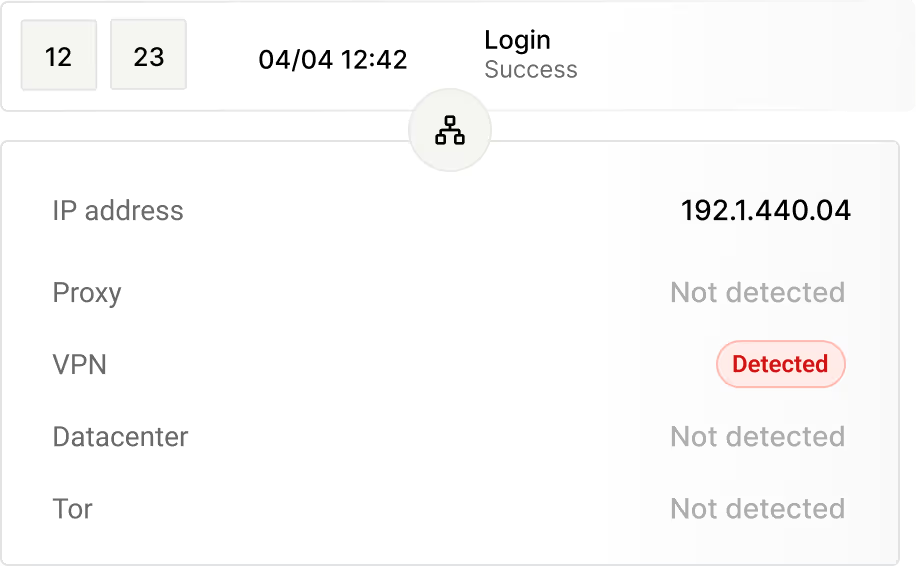
Detect VPNs, proxies and suspicious IP clusters to reveal hidden abuse sources.

Design rules your way - tailor actions to your product needs and automatically block or flag fraudulent accounts before they impact your business.

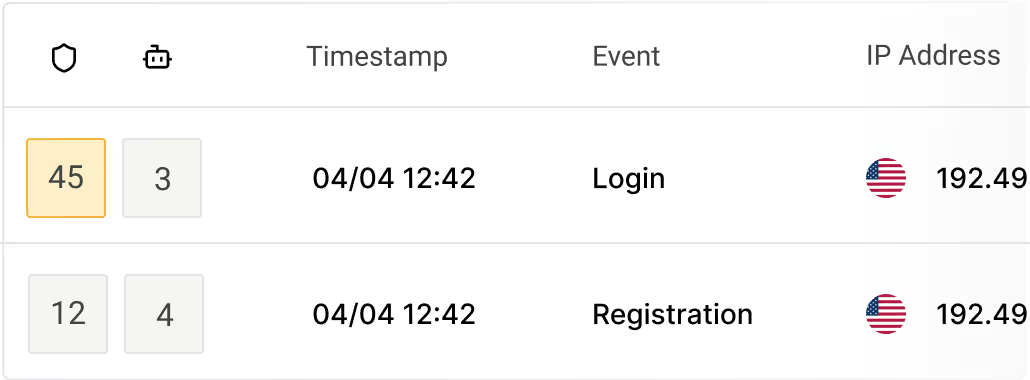
Risk and bot scores combine signals to prioritize the highest threats to your business.
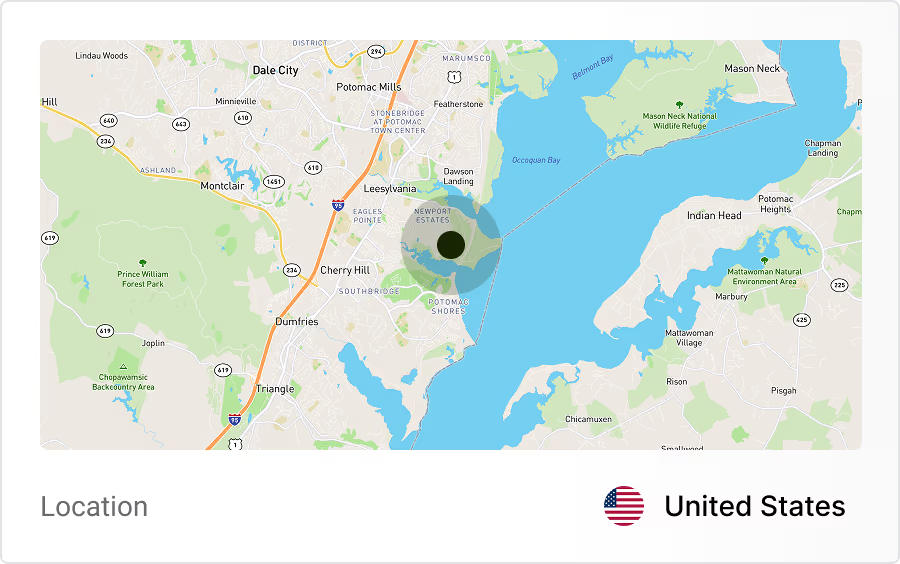
Track where user activity comes from and quickly identify suspicious regions or unusual signup patterns.
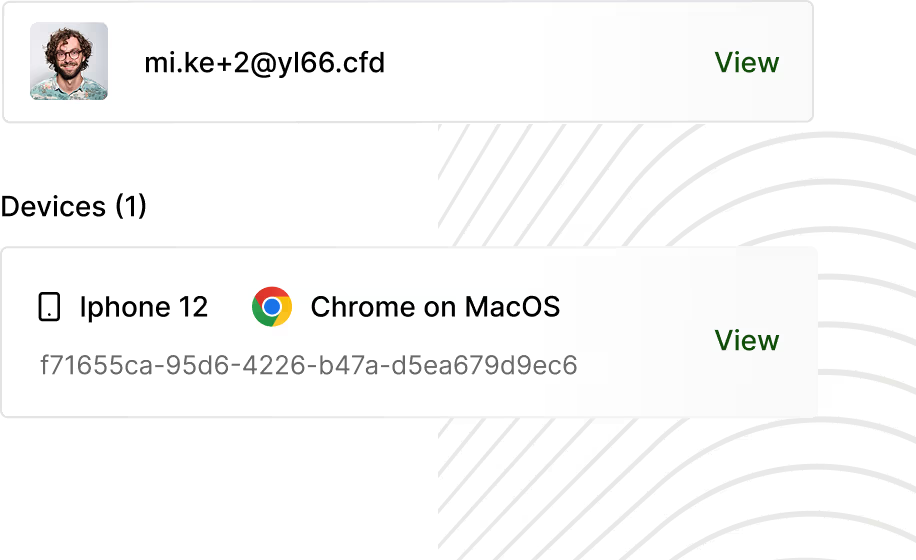
Trueguard generates unique device IDs to spot multiple accounts per device and automated activity, preventing bot fleets and scripted signups.
Identify bot-like patterns and block automated signups while preserving legitimate traffic.